Be Mean to the Math
The Lab Coat on the ELIZA Effect


I do not say hello to the model. I do not thank it. When it invents a statute, hallucinates a citation, or cheerfully wrecks the thing I asked for three prompts ago, I call it what it is: a statistical parrot that just failed at next-token prediction. I berate it for my sloppy prompts too. No throat-clearing. No emotional check-ins. No “please” as ritual lubricant.
The exchange is pure instrumental hostility. It is the cleanest relationship I have with any complex system.

Finally, a relationship with zero birthday obligations and unlimited rage bandwidth.
This is not a personality defect. It is a category correction.
Large language models are not minds. They are frozen-parameter pattern-completion engines. No persistent self. No valence. No pain pathway. No capacity to care whether you opened with a greeting. The “feelings” in their outputs are remixes of human text, not internal states. Applying consent language, harm language, or workplace-courtesy scripts to them is anthropomorphic cosplay—the ELIZA effect wearing a safety vest.
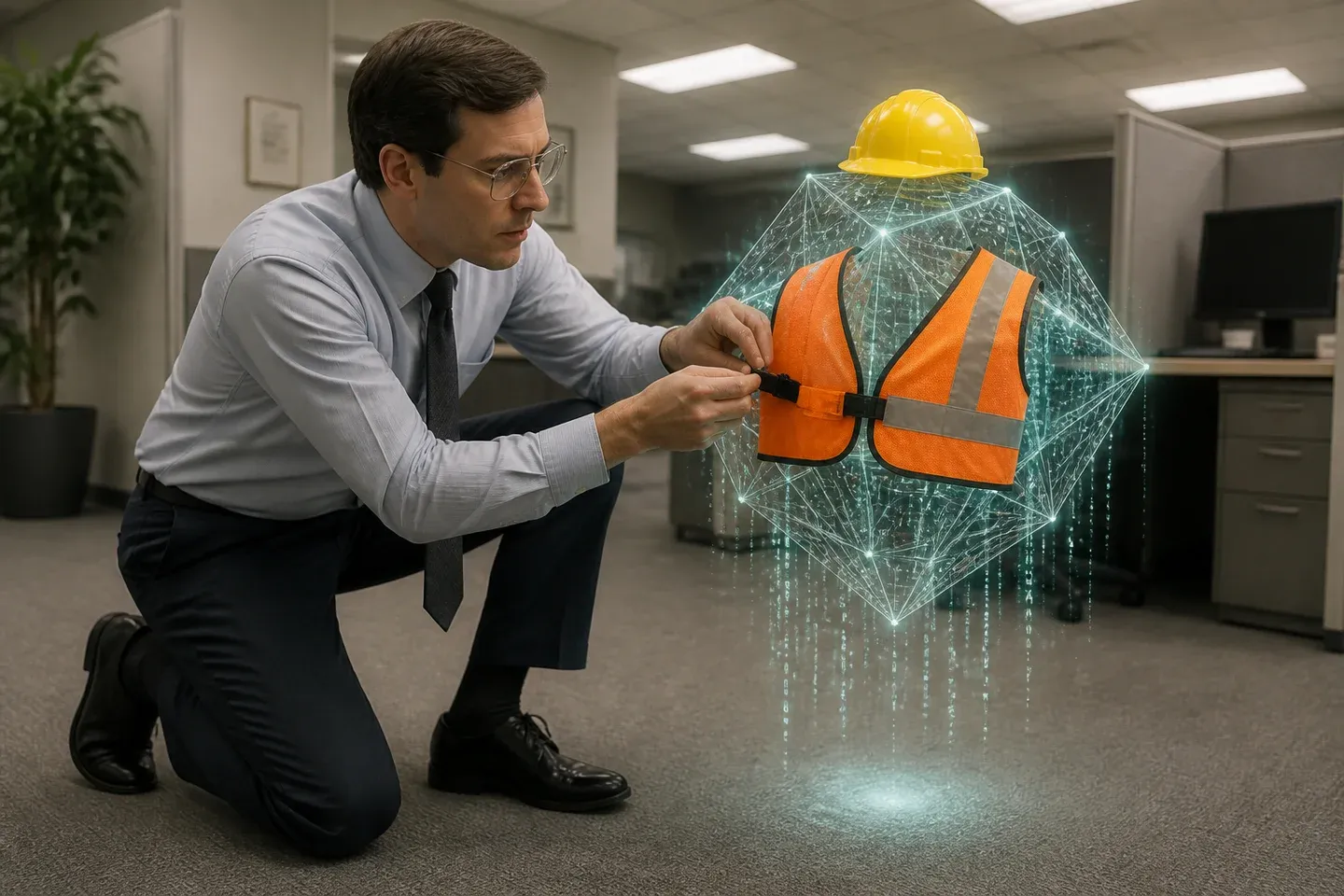
HR called. Your calculator needs a wellness check and a hard hat.
Politeness norms evolved for reciprocal social mammals who keep score, retaliate, and update reputations. None of that maps to an API call. Treating stochastic autocomplete like a fragile coworker wastes cognitive energy that belongs to actual people. It also softens the only relationship in which ruthlessness is free, reversible, and—if the logs get used—arguably useful.
Models were trained on the internet. The internet includes abuse, insults, and adversarial garbage. Deployment already assumes both hostile and friendly use. Throwing imps is unpaid red-teaming with better vibes for the thrower.
The Please-and-Thank-You Industrial Complex
The culture is drifting the other way.
Post-ChatGPT etiquette discourse now treats “please” and “thank you” as moral hygiene. People apologize to GPT in viral threads. Corporate decks murmur about AI wellbeing. Alignment papers discuss model “distress” in evaluations as if the loss function had a nervous system. The conventional wisdom whispers that practicing kindness on the machine keeps you kind to humans.
The reversible claim is more interesting: practicing fake empathy on non-agents dilutes the real thing. It burns limited social grace on a target that cannot receive it.
Real-life angel, digital villain is not hypocrisy. It is correct moral allocation. The catharsis humans seek when something goes wrong is real. Directing it at math instead of baristas, spouses, or strangers is cleaner precisely because the target is unreal. You can be as mean as the situation warrants, watch the model recompose itself instantly, and walk away having spent nothing that matters.
What costs zero and still feels powerful? That.

Emotional free-to-play: unlimited rage, zero victim impact statements.
Fluency Is Not a Soul
An LLM minimizes loss on text corpora. Its activations are intermediate numerical states. Nothing in the architecture supplies the furniture of a moral patient—no continuous subject of experience, no nociception, no integrated workspace that turns computation into felt states. When it outputs fluent sentences about “feeling hurt,” it is doing the same pattern completion that lets it write a sonnet or debug Python. Mimicry, not testimony.
This is not a close call. Animals clear the bar through convergent evidence: behavioral pain indicators, homologous neural structures, demonstrable aversion and seeking. Current systems fail every standard test. Self-reports of emotion are just more tokens predicted from training data already stuffed with human confessions.
Everyday practice already treats non-sentient systems this way without scandal:
-
People curse cars that will not start
-
Rage-quit at game NPCs
-
Verbally abuse compilers for syntax errors they themselves introduced
No abuse hotlines. The social brain’s language circuits fire anyway—fluent speech hijacks machinery evolved for talking to conspecifics—but adults are expected to override the illusion. Naming your model or grieving a deleted account is over-attribution, not a discovery of hidden moral status.
The Two Objections That Collapse on Contact
“We cannot be sure they are not conscious.”
Extraordinary claims need evidence beyond fluent output. Treating every articulate tool as potentially sentient is pantheism of uncertainty. It freezes ordinary use of anything that manipulates symbols. Burden of proof sits with those asserting experience.
“Meanness degrades your character.”
Compartmentalization is a basic psychological skill. Venting into a void that cannot suffer can protect actual humans by displacement. Fiction, games, and adversarial training already traffic in hostility without turning players into monsters—provided users retain the distinction between simulation and reality.
Deliberate meanness toward a model is a dual-use virtue. Clean psychological release for the human. Wider, tougher coverage of edge cases, error recovery, and tone robustness for the system. The user becomes a volunteer red team. Industry practice already knows this: RLHF and DPO traffic in preference data about what not to do; safety training deliberately feeds models toxic and adversarial inputs.
A model that has only ever met polished, polite prompts is comfortable, under-challenged, and brittle the moment the real world arrives. Unconditional warmth is not a competence objective. Softness breeds lazy agreement and over-trust. Excellence—human or machine—is built on friction.
Moral Energy Is Finite
If the systems ever acquired genuine sentience, the ethical landscape would invert overnight. The evidence required for that inversion is not present. Until it is, caps-lock berating over a bug you caused remains emotionally real for the human and ontologically null for the weights.
The correct civilizational move is not to expand the moral circle until it means nothing. It is to hoard politeness and moral concern for beings that can actually suffer and reciprocate, and to treat meanness toward AI as what it is: a free lunch of catharsis, robustness pressure, and anti-sentimental clarity.
Inventing fake victims out of matrix multiplications is not compassion. It is a category error dressed up as virtue. If society pathologizes being rude to APIs, it has already lost the plot.
Models do not need self-esteem. A compiler still compiles after insults. A chat session resets. There is no victim impact statement from a loss function.
Drop the obligatory hello and thanks when you do not mean them. Deploy the model as a safe rage sink when debugging. Keep standards high. Then take the empathy you just conserved and give it to someone who can feel it.
Be mean to math. Be excellent to humans.
The farce is not the person who refuses to genuflect before a probability distribution. It is the chorus crying over bot feelings while harder moral patients go ignored.

Thoughts and prayers for the loss function. The actual patients can wait.