Your Disgust Is the Entire Recipe
Ambiguity Is the Business Model


You’ve seen the clip. A woman at a kitchen counter, face locked in that vacant half-smile, empties a full gallon of nacho cheese over a mountain of chips. Or tears open family packs of raw ground beef and drops them, unseasoned, into a bowl already drowning in mayonnaise and melted Velveeta. Blocks of processed cheese. Industrial jars. Bulk candy. No heat, no tasting, no pretense anyone will eat it. The camera lingers on the ooze while she stays serenely blank.
First thought: Who eats this?
Second, colder: Nobody.
That unresolved beat is the product.

Featured SKU: one gallon of ambiguity, vacant smile sold separately.
These are not cooking videos. They are engineered uncertainty machines running across TikTok, Reels, Shorts, and Facebook. One reading is feeder/food-fetish content: the erotic charge lives in the excess, the goo, the wet-and-messy surplus. The other is pure rage-bait, calibrated so you type “this is disgusting,” stitch it, forward it, and donate your outrage to the metrics.
The videos refuse to pick a lane. That refusal keeps both the quiet fetish watchers and the loud disgusted commenters feeding the same loop. Clear porn gets restricted. An obvious joke deflates the outrage. Hover between categories and you recruit both audiences plus the conflict between them.
Disgust and sexual curiosity are high-arousal states. Platforms amplify whatever spikes watch time, rewatches, comments, and shares. Wholesome recipes lose. Cheese-dump plus dead eyes wins.
The Slaughterhouse Is Efficient
Production costs are a phone, a counter, and $30–80 of supermarket props. The food is disposable set dressing. What appears on camera is rarely a dish—it’s surplus as aesthetic: Velveeta lava until the frame fills with orange sludge, raw meat mixed with candy, gallon-mayo “salads,” casserole biohazards. Edible calories get rendered inedible for the shot and discarded.
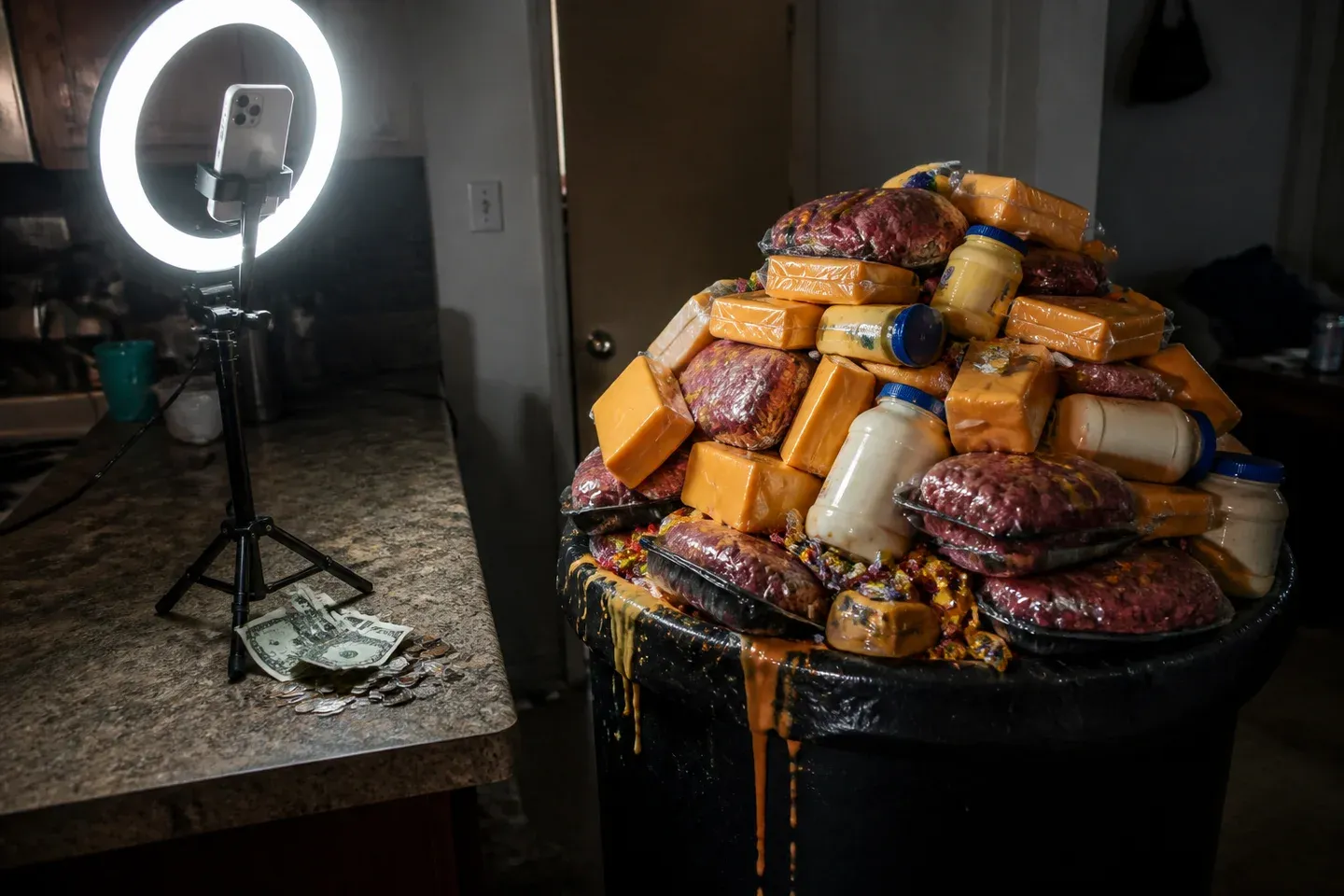
Health department: condemned. Creator fund: ship it.
Scaled across thousands of imitators, a restaurant doing this would be condemned. Online it’s “content.” The missing plated beauty shot and credible taste reaction are deliberate. The video is designed to feel unfinished and wrong so your brain registers alarm. Alarm becomes comments, stitches, reaction videos.
Creators cycle the format for months because the engagement spike keeps getting paid—creator funds, ad share, tips, wishlists, adjacent paid accounts. Variants mutate under new labels (mukbang-adjacent, dump-and-mix, forbidden snack, ASMR hybrid). After bans or demonetization, the same dead-eyed smile and industrial quantities resurface with minor tweaks.
Plausible Deniability, Industrial Scale
Many accounts live in a carefully maintained gray zone. They can claim “just a recipe” or “ASMR” while packing the visual cues: lingering close-ups on goo, exaggerated portions that imply stuffing, slow viscous pours, hands squishing, emphasis on “more” and “bigger,” vacant pleasure. Audio is often silent or wet-sound ASMR. Captions gesture at “guilty pleasure.” The persona—young woman coded as relatable, sometimes a couple, sometimes anonymous hands—delivers a smile that sits in the uncanny valley.
Just vague enough for advertiser-safe distribution. Just charged enough to work.
Counter-arguments collapse under the incentives:
-
“It’s just shitposting” fails because shitposting doesn’t require systematic grocery waste and fetish-adjacent cinematography at this volume.
-
“People can make whatever” is true and irrelevant; freedom doesn’t erase rewards that favor the most extractive version.
-
“Kink-shaming” misstates it: the issue isn’t private practice. It’s industrial packaging of ambiguity to hijack non-consenting mainstream attention while externalizing waste.
-
“Platforms would ban fetish” ignores how platforms actually behave—they restrict explicit sex while monetizing implied sex and outrage because both keep eyes on ads.
Sincere maximalist cooking frames itself as sport. Actual fetish producers gate behind paywalls. Ironic accounts eventually break the bit. This genre never breaks the performance and farms open feeds. Every angry comment is unpaid quality assurance for the algorithm. Every share extends reach for free.
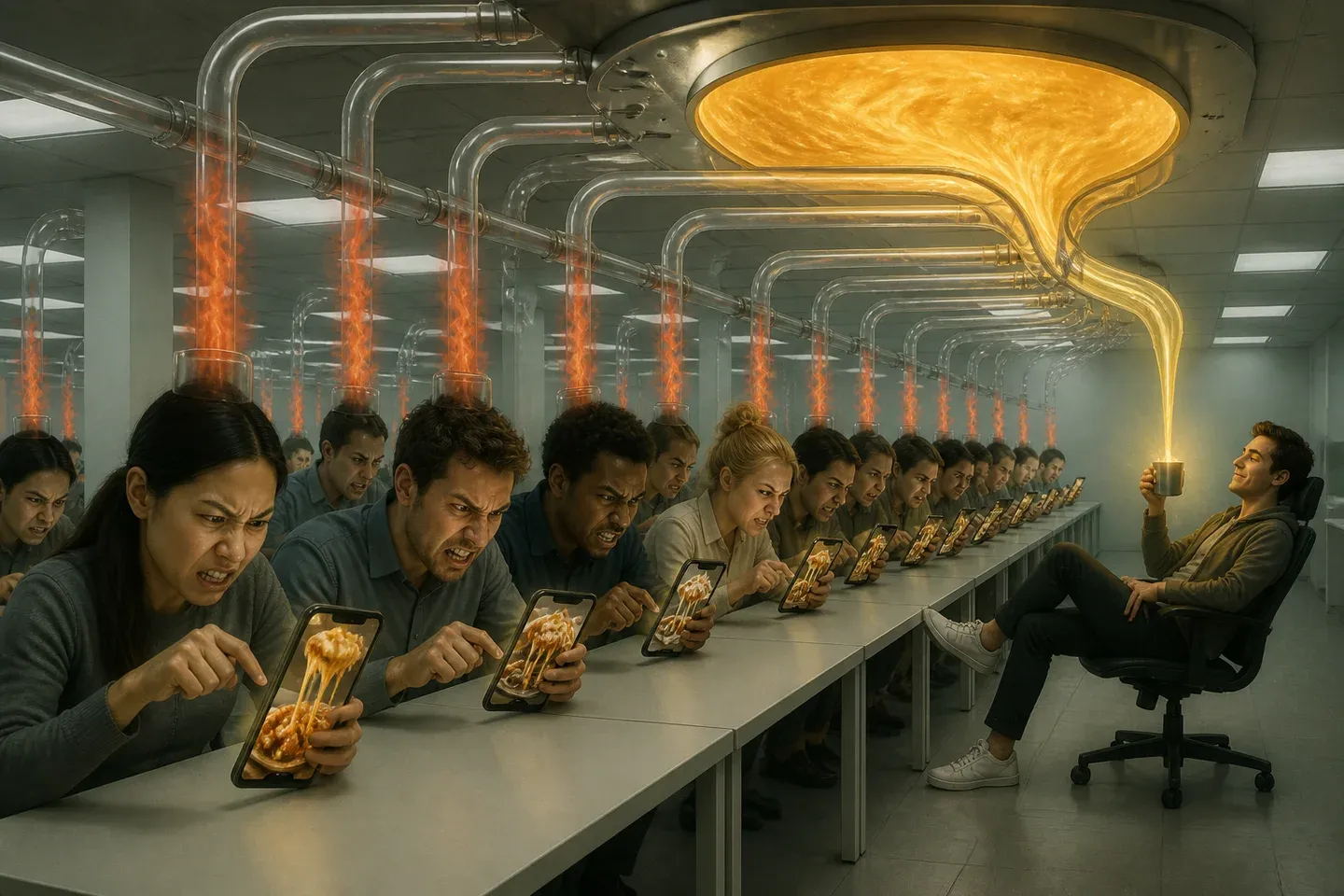
Benefits package: unlimited cortisol and a strong sense of unpaid purpose.
You Are Not the Audience
The cheese was never the point. Your reaction was. Once that clicks, the blank smile and the gallon dump stop looking like eccentricity and start reading as industrial design: harvest high-arousal uncertainty at the lowest possible cost. Food waste is an accepted write-off. Whether a given clip leans feeder or pure rage bait is secondary. The shared business model is what matters.
Viewers think they are consuming content. They are the content. Their dopamine, cortisol, and moral energy are the commodity. The groceries are just the medium.
Recognize the pattern: industrial quantities, no real eating, uncanny affect, comment-section warfare. That combination is an engagement trap. The endless identical clones prove copycat economics, not passion. Persistence after public complaints proves product-market fit. The residual feeling of being dirtied or exhausted after watching is the signature of extractive content.
Starve It
The only coherent response is to refuse the labor. Do not comment. Do not stitch. Do not share so friends can be equally horrified. That labor is the distribution mechanism. Apply the same skepticism to adjacent genres running on surplus and disgust—extreme mukbangs, “satisfying” destruction, fake recipe hacks.
This is not about policing kinks or mocking bad cooks. It is about noticing when platforms and creators collude to turn your nervous system into a revenue stream while torching groceries for set dressing.
We built a machine that noticed anger and kink both pay, then automated content that is neither honest cooking nor honest porn—just a mirror that charges you to look at your own revulsion.
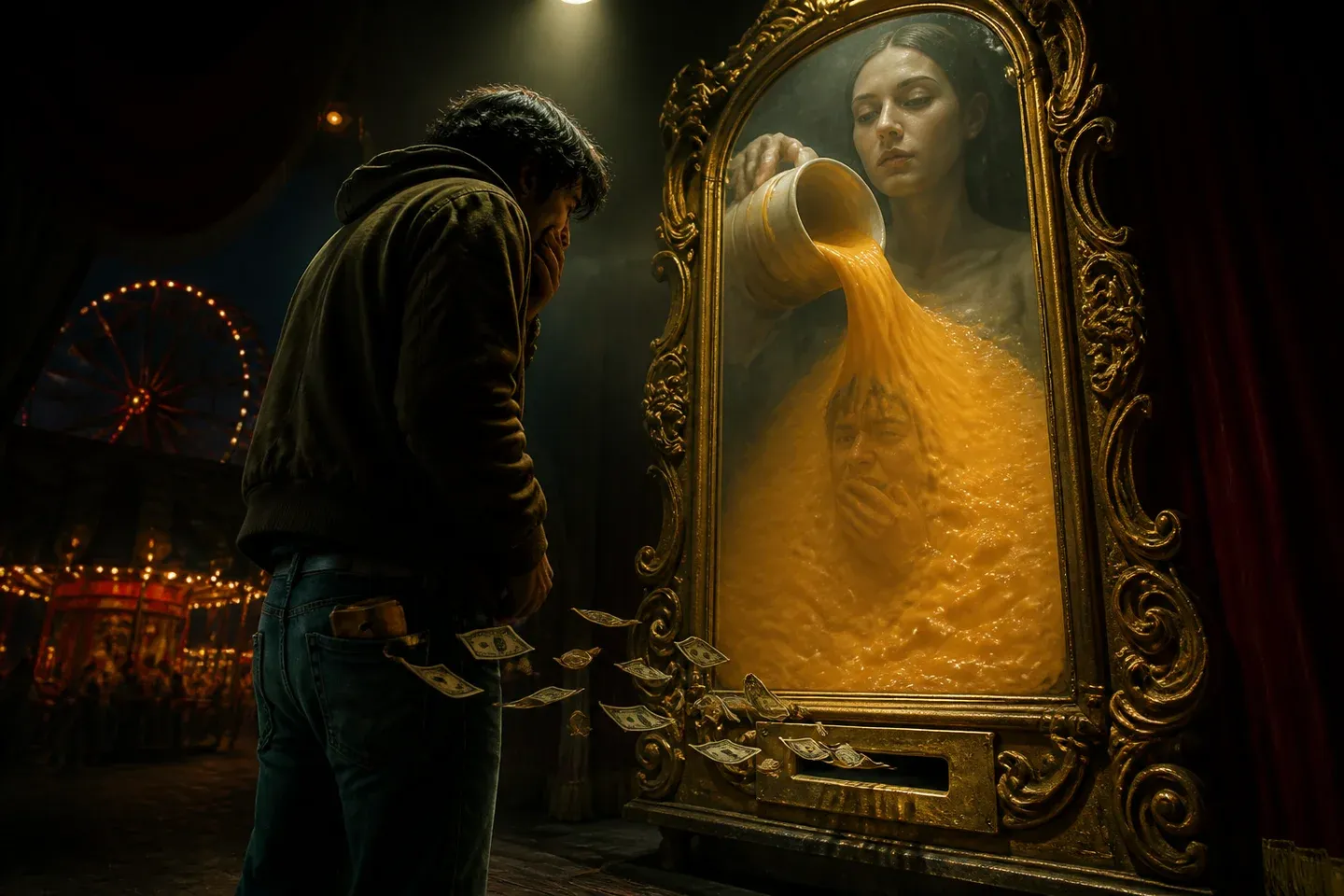
Step right up: the mirror eats first, then bills your nervous system.
Cheap, wasteful, deniable, powered by the audience’s inability to look away.
Looking away is the only move that does not pay them. Next time the nacho-cheese lava appears, scroll past like you’re allergic. The food was already wasted. Don’t waste the attention too.